Cold Stress Guide
NOTE:
The Occupational Safety and Health Act (OSH Act) requires employers to comply with hazard-specific safety and health standards. In addition, pursuant to Section 5(a)(1) of the OSH Act, employers must provide their employees with a workplace free from recognized hazards likely to cause death or serious physical harm. Emergency Preparedness Guides do not and cannot enlarge or diminish an employer’s obligations under the OSH Act.
Emergency Preparedness Guides are based on presently available information, as well as current occupational safety and health provisions and standards. The procedures and practices discussed in Emergency Preparedness Guides may need to be modified when additional, relevant information becomes available or when OSH Act standards are promulgated or modified.
Anyone working in a cold environment may be at risk of cold stress. Some workers may be required to work outdoors in cold environments and for extended periods, for example, snow cleanup crews, sanitation workers, police officers and emergency response and recovery personnel, like firefighters, and emergency medical technicians. Cold stress can be encountered in these types of work environment. The following frequently asked questions will help workers understand what cold stress is, how it may affect their health and safety, and how it can be prevented.
How cold is too cold?
What constitutes extreme cold and its effects can vary across different areas of the country. In regions that are not used to winter weather, near freezing temperatures are considered “extreme cold.” A cold environment forces the body to work harder to maintain its temperature. Whenever temperatures drop below normal and wind speed increases, heat can leave your body more rapidly.
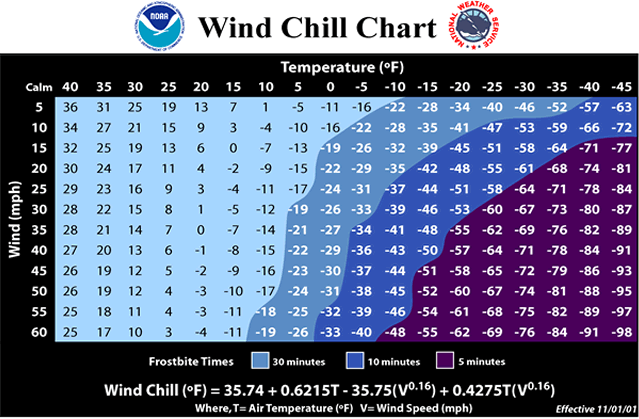
Wind chill is the temperature your body feels when air temperature and wind speed are combined. For example, when the air temperature is 40°F, and the wind speed is 35 mph, the effect on the exposed skin is as if the air temperature was 28°F.
Cold stress occurs by driving down the skin temperature and eventually the internal body temperature (core temperature). This may lead to serious health problems, and may cause tissue damage, and possibly death.
What are the risk factors that contribute to cold stress?
Some of the risk factors that contribute to cold stress are:
- Wetness/dampness, dressing improperly, and exhaustion
- Predisposing health conditions such as hypertension, hypothyroidism, and diabetes
- Poor physical conditioning
How does the body react to cold conditions?
In a cold environment, most of the body’s energy is used to keep the internal core temperature warm. Over time, the body will begin to shift blood flow from the extremities (hands, feet, arms, and legs) and outer skin to the core (chest and abdomen). This shift allows the exposed skin and the extremities to cool rapidly and increases the risk of frostbite and hypothermia. Combine this scenario with exposure to a wet environment, and trench foot may also be a problem.
What are the most common cold induced illnesses/injuries?
- Hypothermia
- Frostbite
- Trench Foot
- Chilblain
What is hypothermia?
Hypothermia occurs when body heat is lost faster than it can be replaced and the normal body temperature (98.6°F) drops to less than 95°F. Hypothermia is most likely at very cold temperatures, but it can occur even at cool temperatures (above 40°F), if a person becomes chilled from rain, sweat, or submersion in cold water.
What are the symptoms of hypothermia?
- Mild symptoms:
- An exposed worker is alert.
- He or she may begin to shiver and stomp the feet in order to generate heat.
- Moderate to Severe symptoms:
- As the body temperature continues to fall, symptoms will worsen and shivering will stop.
- The worker may lose coordination and fumble with items in the hand, become confused and disoriented
- He or she may be unable to walk or stand, pupils become dilated, pulse and breathing become slowed, and loss of consciousness can occur. A person could die if help is not received immediately.
What can be done for a person suffering from hypothermia?
- Call 911 immediately in an emergency; otherwise seek medical assistance as soon as possible.
- Move the person to a warm room or vehicle.
- Remove wet clothes and replace with dry clothes, cover the body (including the head and neck) with layers of blankets; and with a vapor barrier (e.g. tarp, garbage bag). Do not cover the face.
- If medical help is more than 30 minutes away:
- Give warm sweetened drinks if alert (no alcohol), to help increase the body temperature. Never try to give a drink to an unconscious person.
- Place warm bottles or hot packs in armpits, sides of chest, and groin. Call 911 for additional rewarming instructions.
- If a person is not breathing or has no pulse:
- Call 911 for emergency medical assistance immediately.
- Perform cardiopulmonary resuscitation (CPR) until the person responds or medical aid becomes available.
What is frostbite?
Frostbite is an injury to the body that is caused by freezing of the skin and underlying tissues. The lower the temperature, the more quickly frostbite will occur. Frostbite typically affects the extremities, particularly the feet and hands. Amputation may be required in severe cases.
What are the symptoms of frostbite?
- Numbness in the affected body part
- Tingling or stinging
- Aching
- Bluish or pale, waxy skin
- Blisters may occur in the affected part, in severe cases.
What can be done for a person suffering from frostbite?
- Follow the recommendations described above for hypothermia.
- Do not rub the affected area to warm it because this action can cause more damage.
- Do not apply snow/water. Do not break blisters.
- Loosely cover and protect the area from contact.
- Do not try to rewarm the frostbitten area before getting medical help; for example, do not place in warm water. If a frostbitten area is rewarmed and gets frozen again, more tissue damage will occur. It is safer for the frostbitten area to be rewarmed by medical professionals.
- Do not massage the frostbitten area; doing so may cause more damage.
- Give warm sweetened drinks, if the person is alert. Avoid drinks with alcohol.
What is immersion/trench foot?
Trench Foot or immersion foot is caused by prolonged exposure to wet and cold temperatures. It can occur at temperatures as high as 60°F if the feet are constantly wet. Non-freezing injury occurs because wet feet lose heat 25-times faster than dry feet. To prevent heat loss, the body constricts the blood vessels to shut down circulation in the feet. The skin tissue begins to die because of a lack of oxygen and nutrients and due to the buildup of toxic products.
What are the symptoms of trench foot?
- Redness of the skin
- Numbness
- Leg cramps
- Swelling
- Blisters or ulcers
- Bleeding under the skin
- Gangrene (foot may turn dark purple, blue, or gray)
What can be done for a person suffering from immersion foot?
- Call 911 immediately in an emergency; otherwise seek medical assistance as soon as possible.
- Remove the shoes, or boots, and wet socks.
- Dry the feet.
- Avoid walking on feet, as this may cause tissue damage.
What are Chilblains?
Chilblains are painful inflammation of small blood vessels in the skin, caused by the repeated exposure of skin to temperatures just above freezing to as high as 60°F.
What are the symptoms of Chilblains?
- Redness
- Itching
- Possible blistering
- Inflammation
- Possible ulceration in severe cases
What can be done for a person suffering from Chilblains?
- Avoid scratching
- Slowly warm the skin
- Use corticosteroid creams to relieve itching and swelling
- Keep blisters and ulcers clean and covered.
How can cold stress be prevented?
Although OSHA does not have a specific standard that covers working in cold environments, employers have a responsibility to provide workers with employment and a place of employment which are free from recognized hazards, including cold stress, which are causing or are likely to cause death or serious physical harm to them (Section 5(a)(1) of the Occupational Safety and Health Act of 1970). Employers should, therefore, train workers on the hazards of the job and safety measures to use, such as engineering controls and safe work practices, that will protect workers’ safety and health.
Employers should train workers on how to prevent and recognize cold stress illnesses and injuries and how to apply first aid treatment. Workers should be trained on the appropriate engineering controls, personal protective equipment and work practices to reduce the risk of cold stress.
Employers should provide engineering controls. For example, radiant heaters may be used to warm workers in outdoor security stations. If possible, shield work areas from drafts or wind to reduce wind chill.
Employers should use safe work practices. For example, it is easy to become dehydrated in cold weather. Employers therefore, can provide plenty of warm sweetened liquids to workers. Avoid alcoholic drinks. If possible, employers can schedule heavy work during the warmer part of the day. Employers can assign workers to tasks in pairs (buddy system), so that they can monitor each other for signs of cold stress. Reduce the physical demands of workers (for example, use relief workers or rotate extra workers in and out of work for long, demanding jobs). Workers can be allowed to interrupt their work, if they are extremely uncomfortable. Employers should give workers frequent breaks in warm areas. Acclimatize new workers and those returning after time away from work, by gradually increasing their workload, and allowing more frequent breaks in warm areas, as they build up a tolerance for working in the cold environment. Safety measures, such as these, should be incorporated into the relevant health and safety plan for the workplace.
Dressing properly is extremely important to preventing cold stress. The type of fabric worn also makes a difference. Cotton loses its insulation value when it becomes wet. Wool, silk and most synthetics, on the other hand, retain their insulation even when wet. The following are recommendations for working in cold environments:
- Wear at least three layers of loose fitting clothing. Layering provides better insulation. Do not wear tight fitting clothing because that reduces blood circulation to the extremities.
- An inner layer of wool, silk or synthetic to keep moisture away from the body.
- A middle layer of wool, fleece, or synthetic to provide insulation even when wet.
- An outer wind and rain protection layer that allows some ventilation to prevent overheating.
- Avoid wearing wet clothes.
- Wear a hat or hood to help keep your whole body warmer. Hats reduce the amount of body heat that escapes from your head.
- Use a knit mask to cover the face and mouth (if needed).
- Carry extra socks, gloves, hats, jacket, a change of clothes.
- Use insulated gloves to protect the hands (water resistant if necessary).
- Wear insulated and waterproof boots (or other footwear).
Safety Tips for Workers
- Your employer should ensure that you know the symptoms of cold stress.
- Monitor your physical condition and that of your coworkers.
- Take regular breaks to warm up when needed.
- Dress properly for the cold.
- Stay dry in the cold because moisture or dampness, e.g. from sweating, can increase the rate of heat loss from the body.
- Keep extra clothing (including underwear) handy in case you get wet and need to change.
- Drink warm sweetened fluids (no alcohol).
- Avoid touching cold metal or wet surfaces with bare skin.
- Use proper engineering controls, safe work practices, and personal protective equipment (PPE) provided by your employer.
SNOW REMOVAL ON ROOFS
Plan Ahead for Safe Snow Removal
from Roofs
Before snow starts to accumulate, think about
what will be needed to safely remove snow
from roofs or other elevated surfaces:
- Can snow be removed without workers going
onto the roof? - Are there any hazards on the roof that might
become hidden by the snow and need to
be marked so that workers can see them
(skylights, roof drains, vents, etc.)? - How should the snow be removed, based on
the building’s layout, to prevent unbalanced
loading? - What are the maximum load limits of the
roof and how do they compare with the
estimated total weight of snow, snow-removal
equipment, and workers on the roof? - What tools, equipment, protective devices,
clothing and footwear will workers need? - What type of fall protection will be used to
protect workers on roofs and other elevated
surfaces? - What training will workers need to work safely?
- How will mechanized snow removal
equipment be safely elevated to the roof? - How will you protect people on the ground
from snow and ice falling off the roof during
removal operations?
Seven steps to cold weather safety
Winter weather safety tips. Do you know the signs of hypothermia, and what to do if you get frostbite? Read on to make sure you’re ready for cold weather!
1) Listen to the weather forecast
- Check the Environment Canada weather forecast before going out.
- Listen for a wind chill warning. Warnings are based on local climate and are issued when significant wind chills are expected.
- Visit Environment Canada’s new Weather and Meteorology website: http://ec.gc.ca/meteo-weather/
Weather forecasts are available through radio and TV broadcasts, Environment Canada’s Weatheradio service, and online at www.weatheroffice.gc.ca.
2) Plan ahead
- Develop a cold weather safety plan in advance to ensure that safety concerns are addressed when it’s very cold, or when the wind chill is significant. For example, schools could hold recess indoors, outside workers could schedule warm-up breaks, and those involved in winter recreation could reduce the amount of time they spend outdoors.
3) Dress warmly
- Dress in layers, with a wind resistant outer layer.
- When it is cold, wear a hat, mittens or insulated gloves. Keep your face warm with a scarf, neck tube or facemask.
- Wear warm and waterproof footwear. When it is very cold, or when the wind chill is significant, cover as much exposed skin as possible. Your body’s extremities, such as the ears, nose, fingers and toes lose heat the fastest.
4) Seek shelter
- When the wind chill is significant, get out of the wind and limit the time you spend outside.
5) Stay dry
- Wet clothing chills the body rapidly.
- Remove outer layers of clothing or open your coat if you are sweating.
6) Keep active
- Walking or running will help warm you by generating body heat.
7) Be aware
- Watch for signs of frostbite and hypothermia (see below).
- Some people are more susceptible to the cold, particularly children, the elderly and those with circulation problems.
- Check on elderly relatives and neighbours to ensure they are warm enough and have sufficient supplies, particularly when the weather is cold or snowy. They might not feel comfortable going outside to shop and may require food, medications and other supplies.
- The use of alcohol, tobacco and certain medications will increase your susceptibility to cold.
Hypothermia
- Being cold over a prolonged period of time can cause a drop in body temperature
- Shivering, confusion and loss of muscular control (e.g., difficulty walking) can occur.
- It can progress to a life-threatening condition where shivering stops or the person loses consciousness. Cardiac arrest may occur.
What to do:
- Get medical attention immediately.
- Lay the person down and avoid rough handling, particularly if the person is unconscious.
- Get the person indoors.
- Gently remove wet clothing.
- Warm the person gradually and slowly, using available sources of heat.
Frostbite
- A more severe condition, where both the skin and the underlying tissue (fat, muscle, bone) are frozen.
- Skin appears white and waxy and is hard to the touch.
- No sensation – the area is numb or tingling.
What to do:
- Frostbite can be serious, and can result in amputation. Get medical help!
- Do not rub or massage the area.
- Do not warm the area until you can ensure it will stay warm.
- Warm the area gradually; use body heat, or warm water (104 degrees F to 107.6 degrees F ). Avoid direct heat which can burn the skin.
Winter Driving
Although employers cannot control roadway conditions, they can promote safe driving behavior by ensuring workers: recognize the hazards of winter weather driving, for example, driving on snow/ice covered roads; are properly trained for driving in winter weather conditions; and are licensed (as applicable) for the vehicles they operate. For information about driving safely during the winter, visit OSHA’s Safe Winter Driving page.
Employers should set and enforce driver safety policies. Employers should also implement an effective maintenance program for all vehicles and mechanized equipment that workers are required to operate. Crashes can be avoided. Learn more at: Motor Vehicle Safety (OSHA Safety and Health Topic’s Page).
Employers should ensure properly trained workers’ inspect the following vehicle systems to determine if they are working properly:
- Brakes: Brakes should provide even and balanced braking. Also check that brake fluid is at the proper level.
- Cooling System: Ensure a proper mixture of 50/50 antifreeze and water in the cooling system at the proper level.
- Electrical System: Check the ignition system and make sure that the battery is fully charged and that the connections are clean. Check that the alternator belt is in good condition with proper tension.
- Engine: Inspect all engine systems.
- Exhaust System: Check exhaust for leaks and that all clamps and hangers are snug.
- Tires: Check for proper tread depth and no signs of damage or uneven wear. Check for proper tire inflation.
- Oil: Check that oil is at proper level.
- Visibility Systems: Inspect all exterior lights, defrosters (windshield and rear window), and wipers. Install winter windshield wipers.
An emergency kit with the following items is recommended in vehicles.
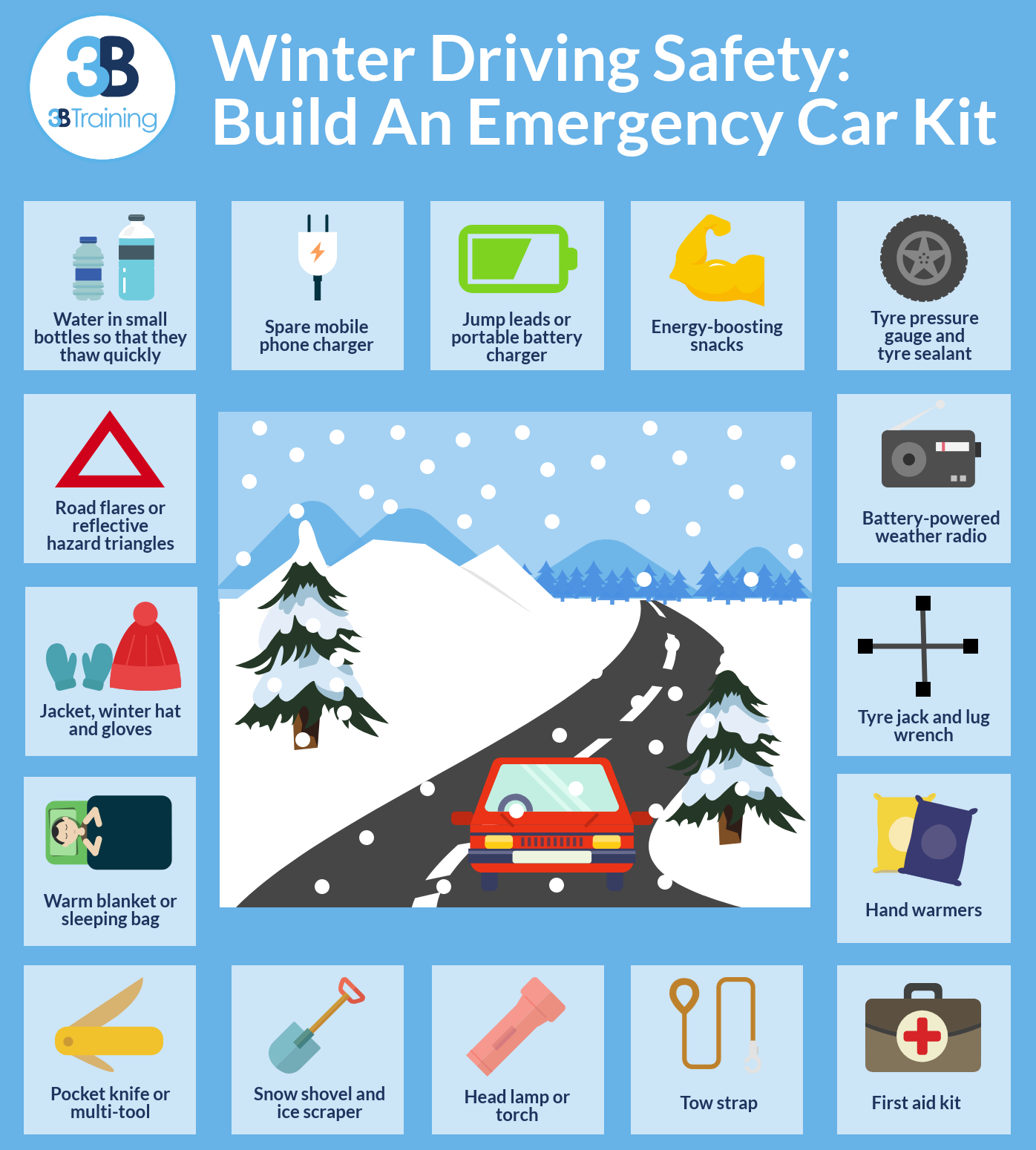
- Cellphone or two-way radio
- Windshield ice scraper
- Snow brush
- Flashlight with extra batteries
- Shovel
- Tow chain
- Traction aids (bag of sand or cat litter)
- Emergency flares
- Jumper cables
- Snacks
- Water
- Road maps
- Blankets, change of clothes
 Education Support Service Organization, Providing Safe and Clean Facilities for Staff and Students
You must be logged in to post a comment.